

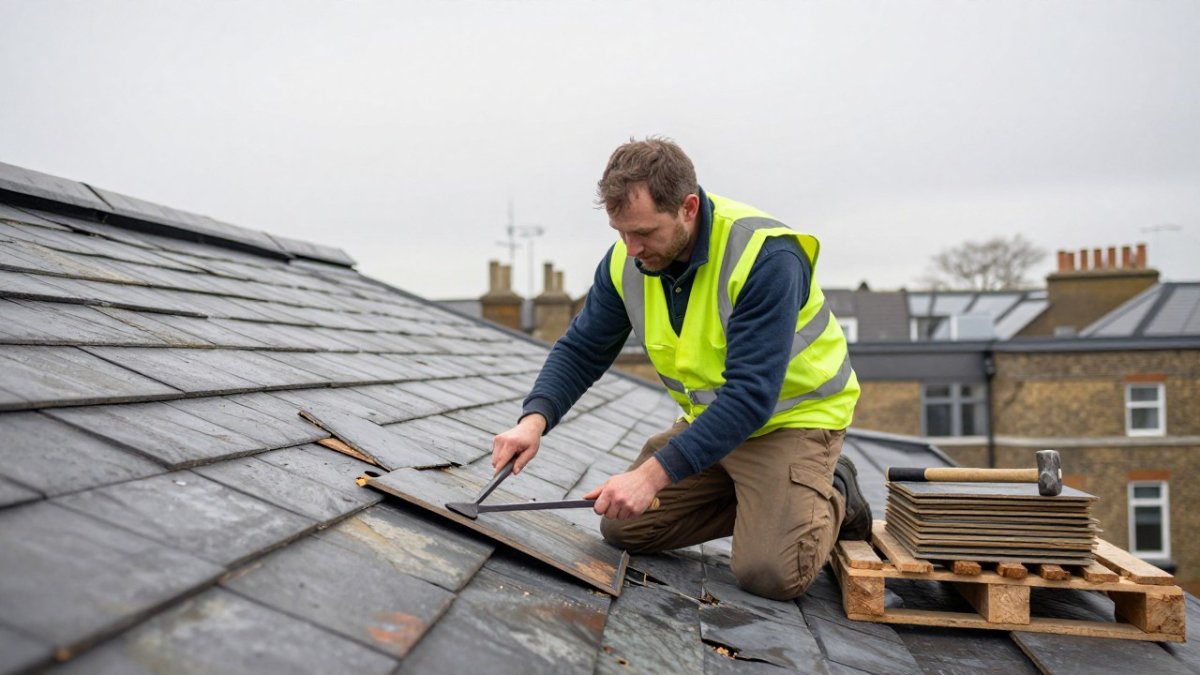
Quick Summary
A residential roof replacement timeline typically runs several working days on site for an average house, with small homes taking two to three days and larger or complex roofs taking a week or more. The exact figure depends heavily on what is found beneath the old covering, so ask about that before agreeing to a start date.
- Small house or bungalow often takes two to three working days.
- Average semi-detached or terrace commonly takes three to five working days.
- Large or complex roofs can take a week or more, depending on access and weather.
- Existing roofing is typically around 19 years old when fully replaced.
- Full project time from accepted quote to final invoice can run several weeks.
Table of Contents
- How Long Does It Take to Replace a Roof on a Typical House?
- Roof Replacement Process Step by Step
- Day-by-Day Project Schedule for a Standard Roof
- Factors Affecting Roof Replacement Time
- Full Project Timeline Versus On-Site Work
- Roof Replacement Preparation Checklist for Homeowners
- Booking Your Roof Replacement With Doctor Roofing
- Frequently Asked Questions
How Long Does It Take to Replace a Roof on a Typical House?
A residential roof replacement commonly takes several working days on site for an average-sized house. Larger homes, steep pitches and complicated roof shapes typically take longer. The figure you’re given depends heavily on what’s underneath the old covering, so ask about that before you agree to a start date.
Home Innovation Research Labs study on roofing age and replacement reasons shows that existing roofing is typically around 19 years old when it’s fully replaced, which tells you most homeowners are dealing with an older roof that needs careful stripping. Our family-run team at Doctor Roofing has worked on roofs across London for 25 years, and we’d rather give you a realistic window than a sales-friendly guess.
- Small house or bungalow: often two to three working days
- Average semi-detached or terrace: commonly three to five working days
- Large or complex roof: a week or more, depending on access and weather
Roof Replacement Process Step by Step
A full replacement is more than tearing off old tiles and laying new ones. A proper job strips the roof back to the rafters, which lets us check the timbers and rebuild the structure correctly.
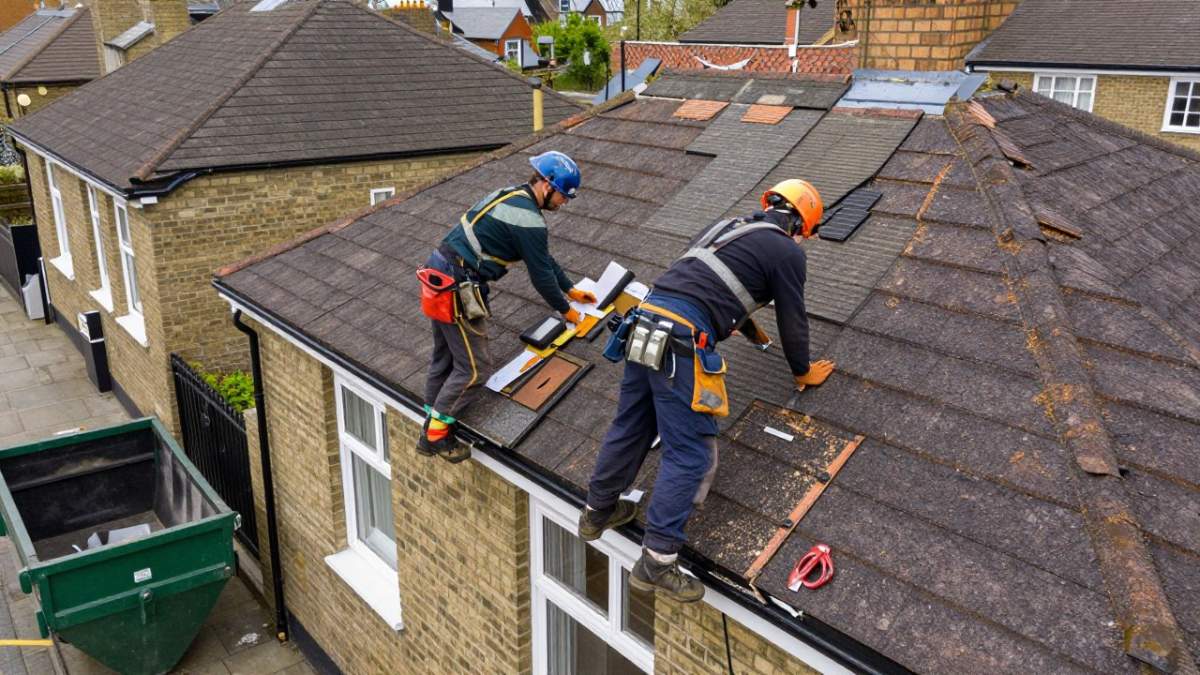
- Protect the property. The area around the house is covered and scaffolding or access equipment is set up.
- Strip the old covering. Tiles, slates or felt come off down to the rafters.
- Inspect and repair the timbers. Any rot, damp or sagging gets dealt with before anything new goes on.
- Lay new underlay and battens. This layer keeps water out and helps the roof breathe.
- Fit the new covering. Tiles, slates or the chosen material go on, with the work finished to a tidy standard.
- Clear the site. The area is tidied up once the work is complete.
Day-by-Day Project Schedule for a Standard Roof
A broad estimate is useful for planning, but it does not show what will happen on your property each day. The schedule below sets out a typical sequence for an average house, and larger roofs follow the same general order over more days. Following this sequence makes the work easier to anticipate, while a useful overview can help clarify how each stage fits into the overall timeline.
Day one: setup and strip-off. The crew arrives early to position the skip and load scaffolding or access equipment. Windows, walls, gutters and any garden features close to the house are covered. Stripping then begins, working from the ridge down and from one end of the roof to the other so the exposed area is kept as small as possible. Tiles, slates, battens and old underlay are removed down to the rafters and dropped into the skip. By the end of the day the roof should be watertight enough to cope with overnight rain, usually with a temporary breather membrane or tarpaulin over the open sections.
Day two: timber inspection and preparation. With the rafters exposed, the crew checks for rot, damp, sagging, insect damage and any previous poor repairs. Sound timbers are left in place; soft or broken sections are cut out and replaced. This is also when any new noggins, firrings or structural repairs are fitted. New underlay is then laid across the rafters, followed by battens set to the correct gauge for the chosen covering. If the inspection reveals significant rot, this day can extend into a third day of timber work before the roof is closed again.
Day three: covering and detailing. The new tiles, slates or other covering are laid from the bottom edge upwards, with each course overlapping the one below. Ridge tiles, hip tiles, verge details, flashing around chimneys and any lead work are fitted as the covering reaches them. Valleys and abutments receive particular attention because these are the most common leak points. By late afternoon the main covering should be complete and the roof fully weathertight.
Day four: finishing, inspection and clearance. On a straightforward job this day may only be a half day. Remaining ridge and hip pointing is finished, scaffolding is struck, the skip is collected and the ground is swept for nails and broken tiles. The contractor and, where required, a building control inspector walk the roof to confirm the covering, ventilation and fixings meet the specification. Any snagging items are noted and returned to.
Day five and beyond: contingency. A five-day window allows for a lost day to rain, a late material delivery or a small area of unexpected repair. If the job runs into a second week, it is usually because structural work was found, the roof is unusually large or complex, or access is restricted by narrow streets and parked cars.
The typical sequence on an average house breaks down as follows.
| Day | Main work | Key check |
|---|---|---|
| Day one | Strip roof to rafters | Watertight overnight |
| Day two | Inspect and repair timbers, lay underlay and battens | Rot, damp or sagging found |
| Day three | Lay covering and detailing | Valleys and abutments |
| Day four | Finish, clear site and inspect | Snagging items noted |
| Day five and beyond | Contingency | Structural work or access issues |
Factors Affecting Roof Replacement Time
Several things push a job longer or shorter:
- Roof size and pitch: more area and steeper slopes mean more hours on the roof.
- Material: clay tiles, concrete tiles and natural slate each take different amounts of time to lay.
- Condition of the timbers: if rot is found, repairs add days.
- Access: narrow terraced streets and limited parking can slow deliveries and scaffolding.
- Weather: rain and high winds stop work, and the crew must keep the roof sealed overnight.
- Chimneys, skylights and lead work: each one adds finishing time.
Full Project Timeline Versus On-Site Work
The days a crew spends on your roof are only one part of the calendar time from first enquiry to finished job. Homeowners are often surprised when a three-day roof takes three weeks from acceptance of the quote, so it helps to separate the two figures.
On-site working days are the days when scaffolding is up, materials are being fitted and the property is disrupted. The number of days depends on the size and complexity of the roof.
The full project timeline includes everything that happens around those working days:
-
Survey and quotation. A site visit, roof inspection and written quotation take time, and longer if a structural engineer or building control input is needed.
-
Contractor booking lead time. Roofing work can be booked ahead, and the gap between accepting a quote and the crew arriving can be a significant part of the overall timeline.
-
Permits and approvals. Some roof work may require planning permission or approvals, depending on the property type and location (Roof – Planning Permission – Roof). Check with the local authority or your contractor before booking.
-
Material ordering and delivery. Lead times depend on the chosen material, so ask your contractor about availability for your job.
-
Weather contingency. A realistic programme allows at least one or two lost days for rain or high winds. In winter, more contingency is sensible.
-
Inspection and sign-off. Building control inspection, where required, and the contractor’s own final inspection are part of the process.
The full project can take several weeks from accepted quote to final invoice, even though the roof itself is only exposed for a shorter working period. Ask your contractor for both figures in writing: the expected on-site duration and the expected start date. That way you can plan around the disruption and understand why the calendar may run longer than the working days suggest.
A short on-site duration is not the same as a short overall project, so ask about lead times and inspections when you receive a quote.
Roof Replacement Preparation Checklist for Homeowners
Getting ready makes the job run more smoothly:
- Clear cars and garden furniture away from the house.
- Move anything fragile from inside rooms near the roof.
- Arrange somewhere to park for the skip and van.
- Tell neighbours about the scaffolding and the working days.
- Check that the loft is clear so the rafters can be inspected.
- Ask about building regulation sign-off for the new roof (Building regulations approval: When you need approval).
Our frequently asked questions cover quotes, planning and what to expect, and they’re worth a read before the work starts. You can find answers to common questions in our frequently asked questions.
Booking Your Roof Replacement With Doctor Roofing
If you’re ready to plan your job, our roof replacement services cover the full range of re-roofing work, and you can see new roof options before you decide. Every new roof we fit meets current Building Regulations, and we strip back to the rafters to build for long-lasting quality.
Replacing a roof is a big decision, and the timeline matters as much as the finished result. If you’re not sure whether your roof needs replacing, our guide on warning signs is a good place to start. Get a quote from Doctor Roofing today to discuss a schedule for your home.
Frequently Asked Questions
How long does it take to replace a roof on an average house?
A standard residential roof replacement commonly takes several working days on site, depending on the size of the roof, its pitch, the roofing material and the weather. A straightforward pitched roof on a typical London house may be stripped and recovered in a few days, while larger or more complex roofs take longer. Doctor Roofing can confirm the likely timeline for your property once the roof has been inspected. Pricing depends on the size and specification of the job, so please request a quote from Doctor Roofing for current prices.
Can bad weather delay a roof replacement?
Yes. Rain, high winds and frost can all stop roofing work, because felt, membranes and tiles need dry conditions to be fitted correctly. A good contractor plans for these interruptions by building contingency days into the programme and protecting the exposed structure overnight with sheeting. The exact impact depends on the season and how exposed the roof is.
What can I do to prepare my home for a roof replacement?
Clear the areas directly below the roof, move vehicles off the drive so skips and scaffolding have room, and remove fragile items from loft spaces and upper rooms. Let the roofing team know about any pets, children or home workers who will be present during the work. Make sure access to the loft and any internal rooms the roofers need is clear.
How long after a roof replacement will the site be cleared?
Old materials, waste and protective sheeting are removed as part of the job, and a clean-up of the site is expected once the work is complete. If anything is left behind after completion, raise it with the contractor before they leave the site.
